1) Slow response times and timeouts for report queries, page rendering, login, and other user-facing operations
2) Frequent errors during concurrent multi-user operations
1) What is the maximum number of concurrent users supported? Can the system handle large-scale transaction volumes?
2) Is resource utilization optimized? High CPU and memory usage observed under peak load conditions
3) Does the system meet requirements for sustained, uninterrupted operation over extended periods (e.g., stability/stress testing)?
4) Are there performance bottlenecks in the codebase? Is the system architecture and database schema properly designed for scalability and efficiency?
5) Are configuration parameters across system modules properly tuned? What are the current performance bottlenecks?
6) How should server resources be planned? Which components (e.g., application servers, databases, caches) should be scaled—and how—to improve overall system performance?
1) Requires independent third-party evaluation reports—internally conducted testing lacks objectivity and credibility.
2) Lacks capability to objectively assess end-to-end system performance: no established stress modeling or capacity estimation techniques; limited ability to deeply monitor key performance indicators (KPIs) and provide actionable optimization recommendations.
3) Insufficient testing resources: shortage of skilled performance engineers; inadequate load-generating servers and network bandwidth for realistic simulation.
4) Technology gaps: lack of enterprise-grade performance testing tools; incomplete test strategies; limited analytical capabilities on execution results; insufficient experience in identifying and resolving performance bottlenecks.
Server Infrastructure
API Performance Testing
UI Rendering Performance Testing
WeChat Mini Program
Mobile Application (Native App)
Mobile Web Application (HTML5-based)
Microservices Architecture
A dedicated testing team with assigned project managers; experienced in industry-specific performance benchmarks such as system throughput, resource utilization, and stability. We offer multiple diagnostic methods to help clients identify and resolve performance issues effectively.
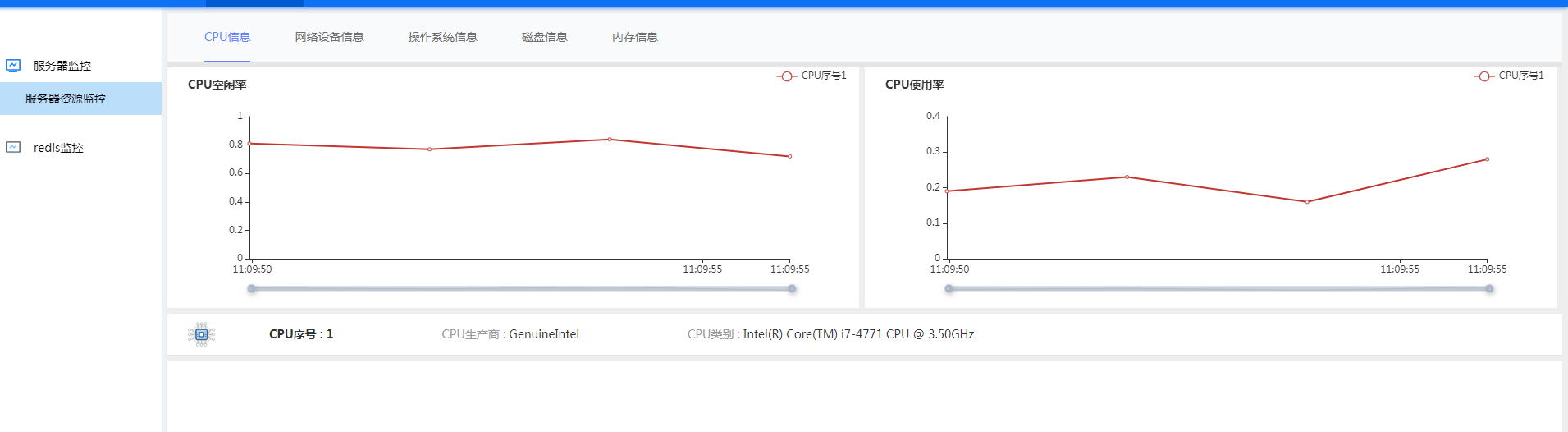
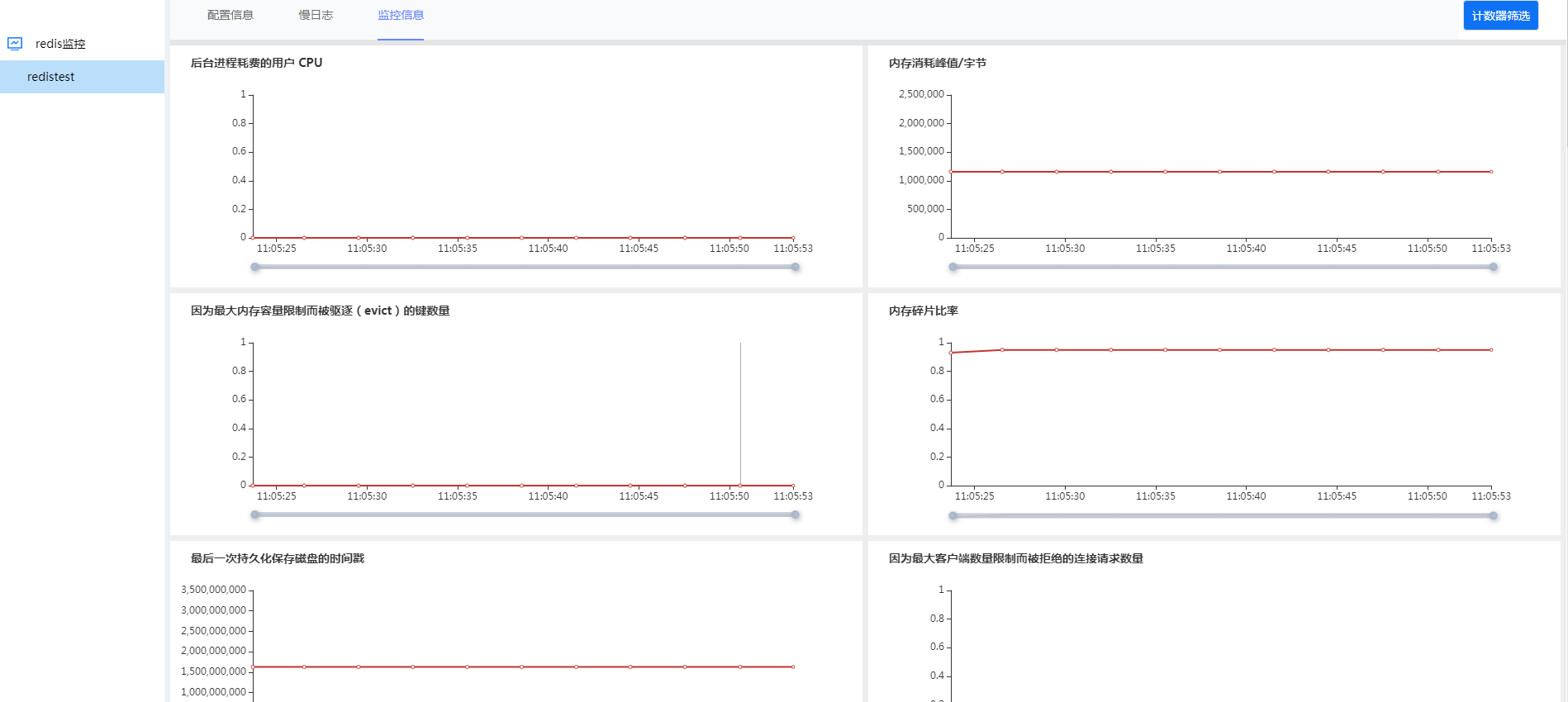
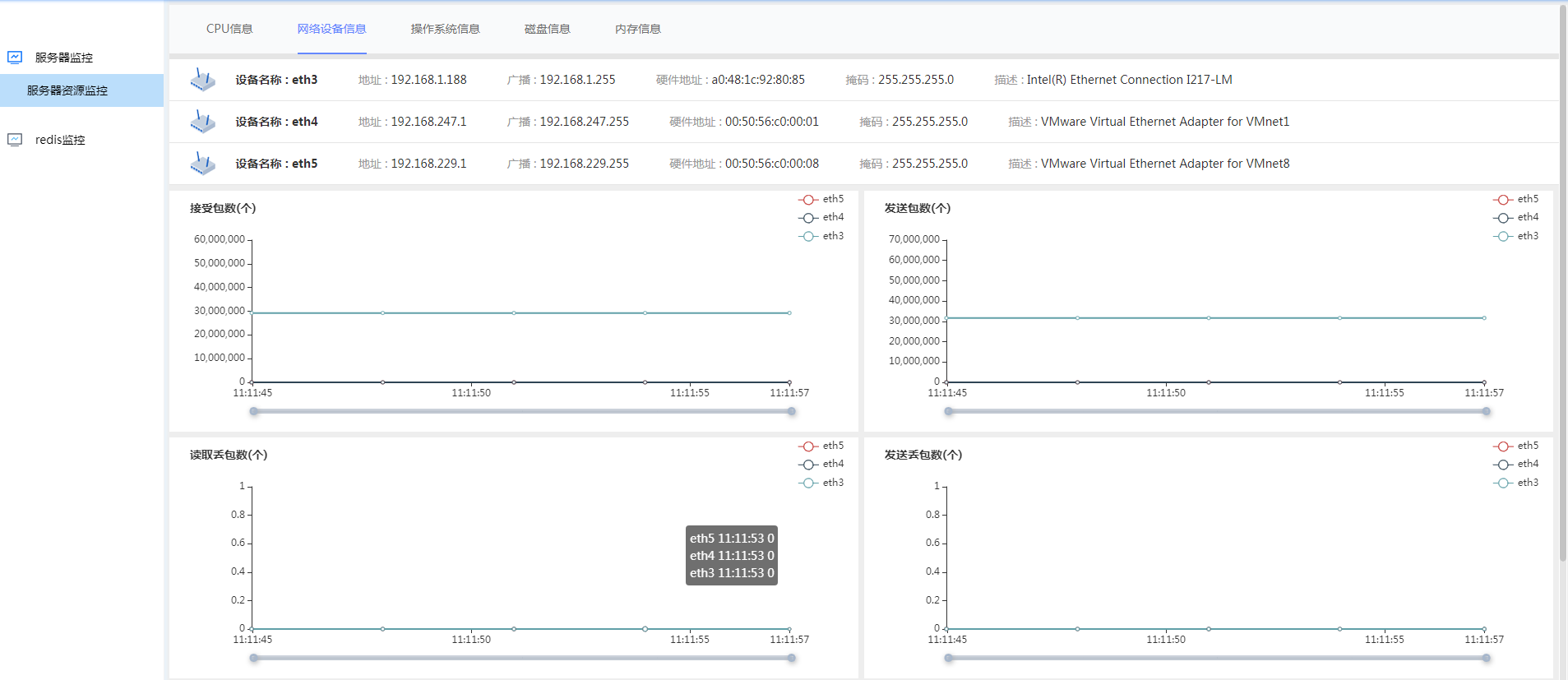
Tools have been widely adopted in industries such as finance, enterprise IT, inspection agencies, and defense. Performance data aligns closely with leading commercial tools (data variance >5%). Supports system-level and process-level resource monitoring, including CPU and memory utilization metrics.
End-to-end standardized and transparent process—from requirements gathering to delivery. Performance metrics are comprehensive, objective, and accurate. Flexible test strategies customizable to client needs. Test scripts can be executed on our web-based performance testing platform.
Offers various test types including load, stress, spike, endurance, and configuration testing; supports both single-scenario and mixed-scenario simulations. Concurrent user modeling includes percentage-based distribution, incremental ramp-up, and steady-state models.
Successfully delivered projects across financial, enterprise, government, and higher education sectors. Experienced in performance testing of B/S, C/S, mobile apps, mini-programs, and H5 web applications. Capable of server probing via API interfaces or GUI-level interactions performance bottlenecks.
After initial performance validation, we deliver test scripts to clients who can then perform self-service performance testing on our cloud-based platform—reducing long-term testing costs and increasing agility.
1) Initial Business Discussion
2) Requirements Clarification Meeting
3) Contract Signing
1) Test Environment Setup
2) System Requirements and Architecture Assessment
3) Development of Test Strategy and Plan
4) Review and Approval of Test Strategy and Plan
1) Test Scenario Analysis and Design
2) Test Case Design and Peer Review
3) Test Script Design
4) Script Parameterization
5) Configuration of Transactions, Rendezvous Points, and Parameters
6) Test Data Preparation
1) Configuration of Concurrent Users, Duration, and Execution Pattern in Test Scenarios
2) Execution of Test Scenarios
3) Recording and Analysis of Test Results
1) Test Report Authoring and Internal Review
2) Preparation for Project Delivery
3) Client Acceptance and Project Closure
Tool Overview,Tool Architecture Diagram,Deployment Architecture
Tool Comparison Report, Mutual Recognition Report (or Interoperability Validation Report)
Test Plan Description and Screenshot
Test Strategy Description and Screenshot
Test Case Design and Approval
Test Scenario Design and Screenshot
Test Result Explanation and Screenshot
Test Delivery Description and Deliverables List
1) Insufficient Concurrent Connection Configuration
2) Server Resources Have Reached Capacity (Bottleneck)
3) Network Bandwidth Limitation
4) Poor Database SQL Execution Efficiency (e.g., Missing Indexes, Full Table Scans)
1) JVM Memory Parameters Set Too Low (e.g., -Xmx, -Xms)
2) Application-Level Memory Leak or Inefficient Garbage Collection
1) JVM Performed Garbage Collection (GC), Causing Performance Degradation
2) Network Instability (Packet Loss or Latency Fluctuations)
B/S (Browser/Server Architecture)
Load Testing
View Details>>B/S (Browser/Server Architecture)
Load Testing
View Details>>B/S (Browser/Server Architecture)
Load Testing, Configuration Testing
View Details>>B/S (Browser/Server Architecture)
Load Testing
View Details>>B/S (Browser/Server Architecture)
Load Testing
View Details>>19 Years of Testing Expertise — Delivering High-Quality Professional Services and SaaS-Based Testing Tools
Learn More About Our Professional Services
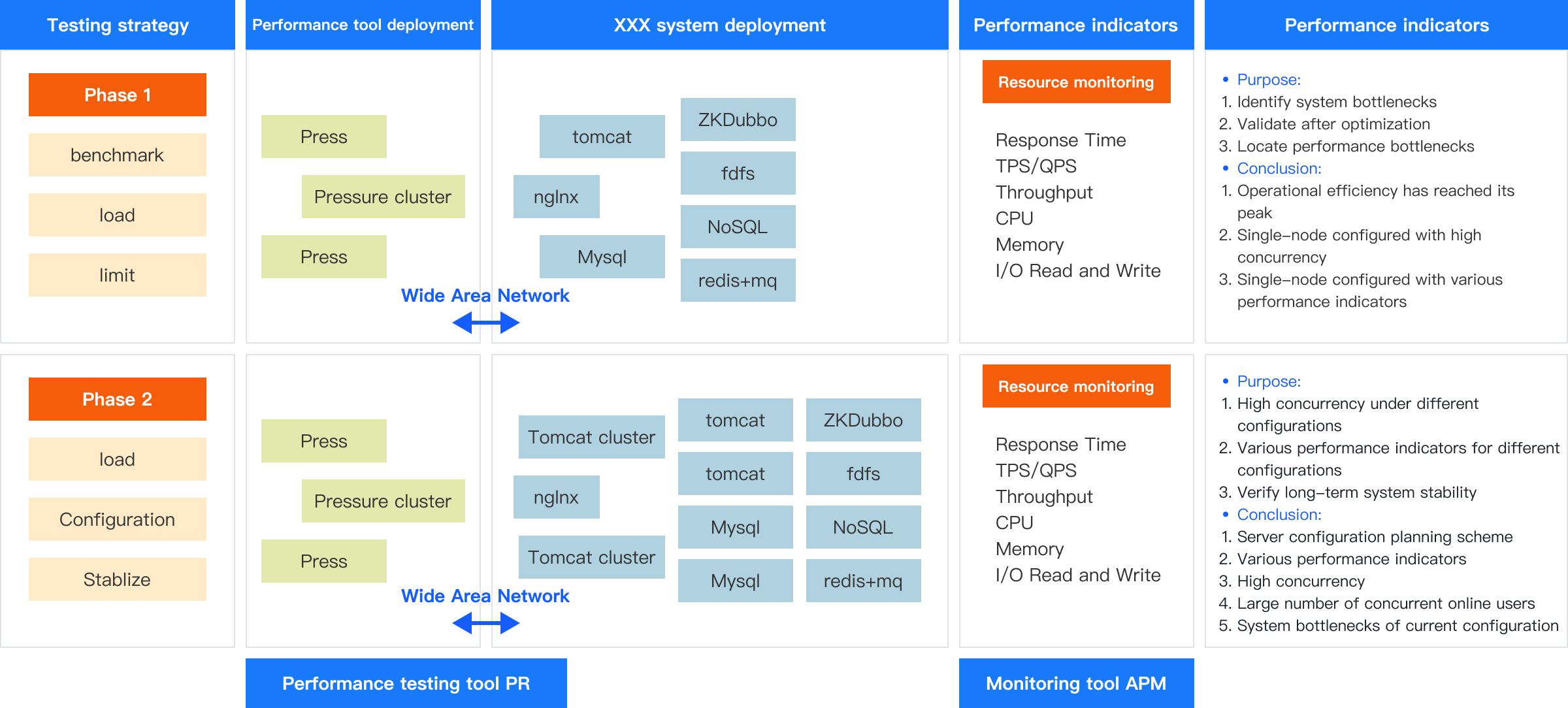
View Details>>Defines entry and exit criteria for each testing phase, including scope of work, deliverables, phase objectives, and schedule; customizable based on specific project goals and testing objectives.
| TestPhase |
WorkItems |
Strategy |
EntryCriteria |
Schedule |
Deliverables |
PhaseObjectives |
|---|---|---|---|---|---|---|
| Requirements Phase |
|
|
|
TBD |
|
Establish foundational understanding of business context and technical landscape; formalize initial test planning artifacts. |
| Design Phase |
|
|
Test cases reviewed and approved (peer-reviewed). | TBD |
|
Convert requirements into automated, verifiable test assets ready for execution. |
| Execution Phase |
|
|
|
XXX | Execution Log |
|
| Delivery Phase |
|
|
Confirm all performance indicators while meeting customer performance requirements. | XXX | Test Report | Deliver test reports, execution logs, test cases, and test scripts. |
Customizable based on testing objectives
Customizable test types, execution strategies, and evaluation criteria based on testing objectives.
| Test Type | Test Objective | Execution Strategy | Evaluation Criteria | Deliverables | Test Rounds | Value / Purpose |
|---|---|---|---|---|---|---|
| Baseline Testing |
|
|
1) Transaction success rate ≥ 99%% | 1) Deliverables: Test scripts | Rounds: 1 | Validate script alignment with test case design and real-world usage scenarios |
| Load Testing |
|
|
|
|
Rounds: 3 | Assess whether a single-node deployment meets performance requirements; provide baseline parameters for configuration testing; validate if response time satisfies client SLAs. |
| Stress Testing |
|
|
|
|
Rounds: 3 | Uncover system limitations and performance bottlenecks under extreme load conditions to guide optimization efforts. |
| Configuration Testing |
|
|
|
|
Rounds: 3 | Validate performance under minimum viable load-balanced configuration; derive optimal hardware/software configuration recommendations based on prior test data if current setup fails to meet requirements. |
| Stability Testing (Soak Testing) | 1) Validate system stability during prolonged operation under sustained load that meets performance requirements. |
|
|
1) Execution logs | Rounds: 1 | Detect long-term issues such as memory leaks, thread contention, connection pool exhaustion, or gradual performance degradation due to resource contention. |
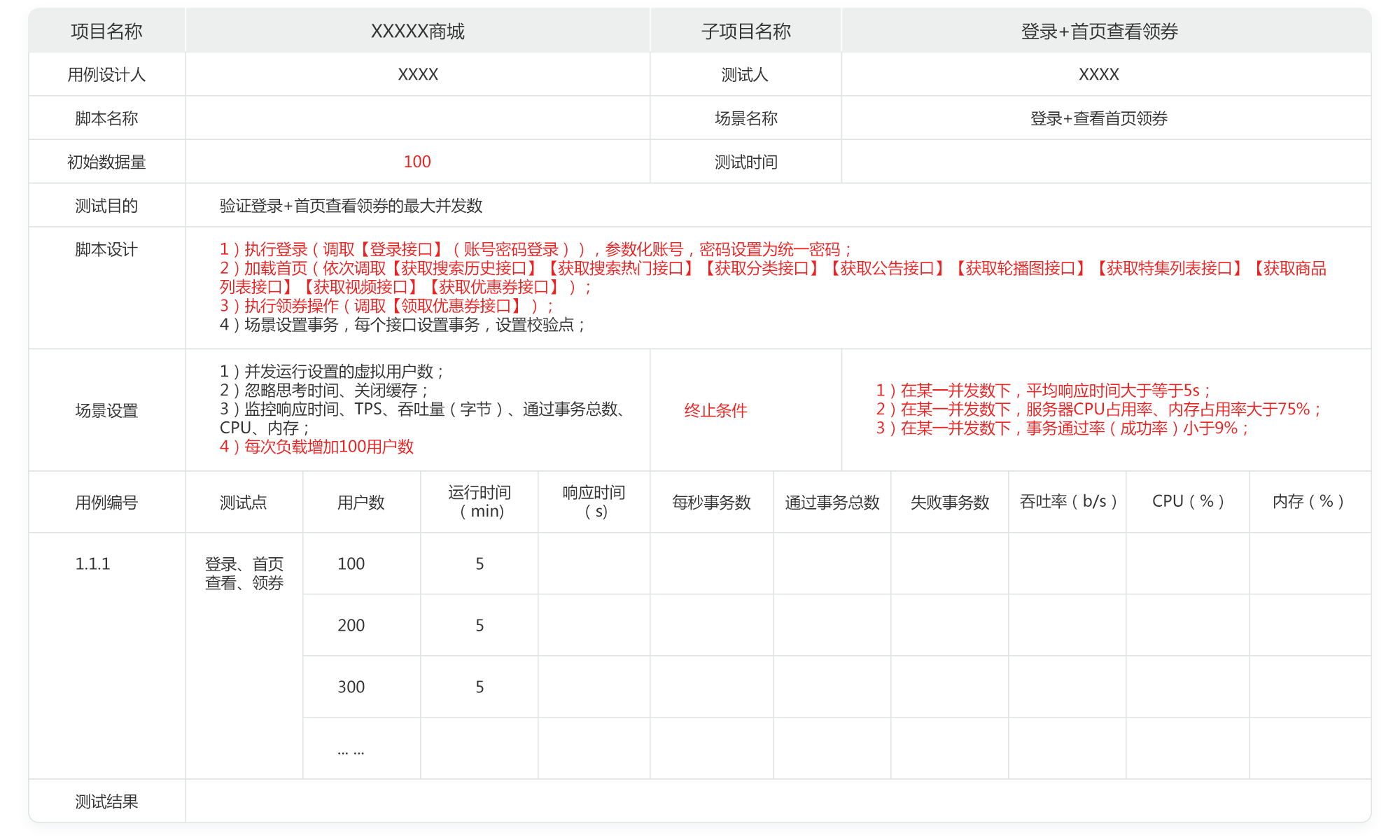
Below is the template for a performance test case.
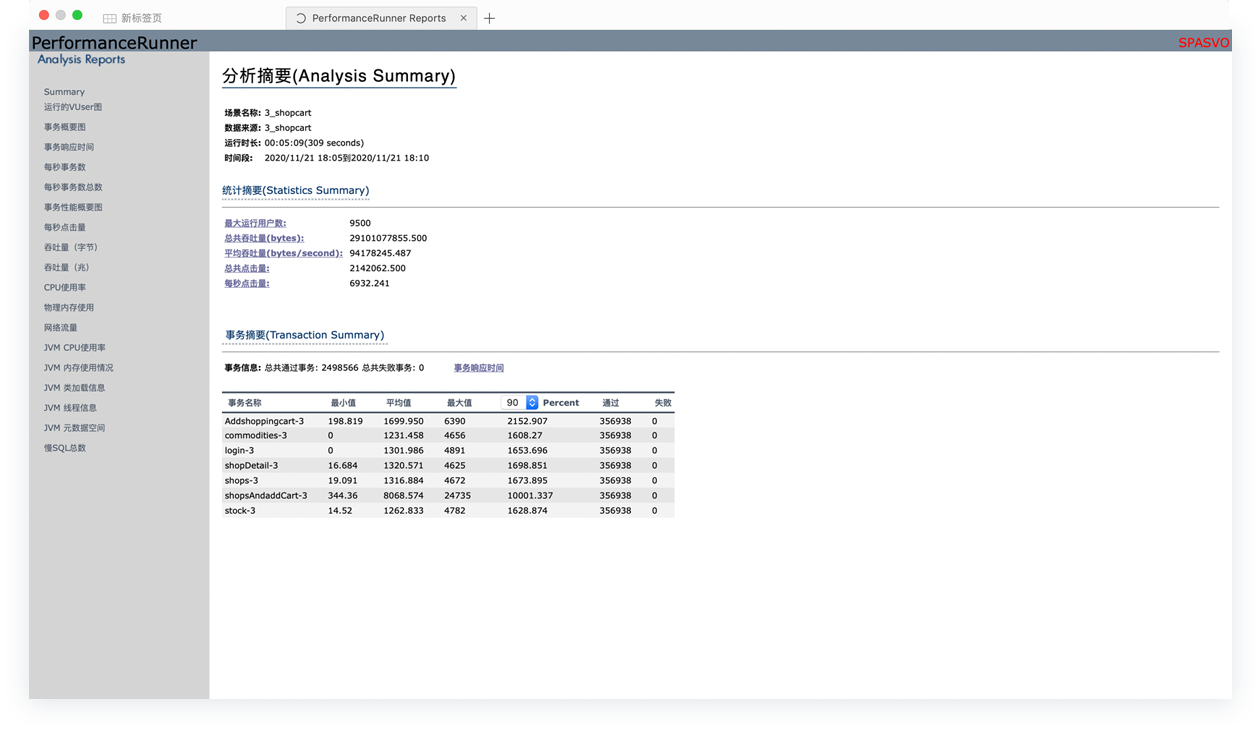
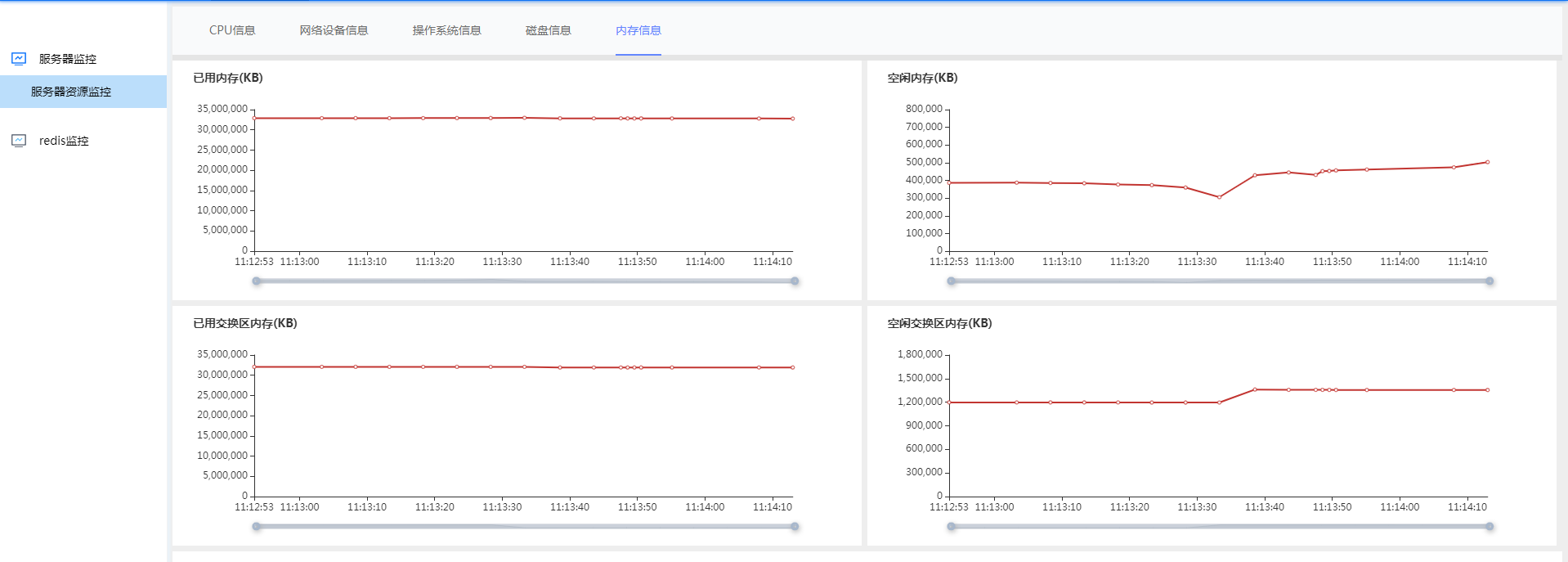
Screenshot of Performance Test Execution Log.
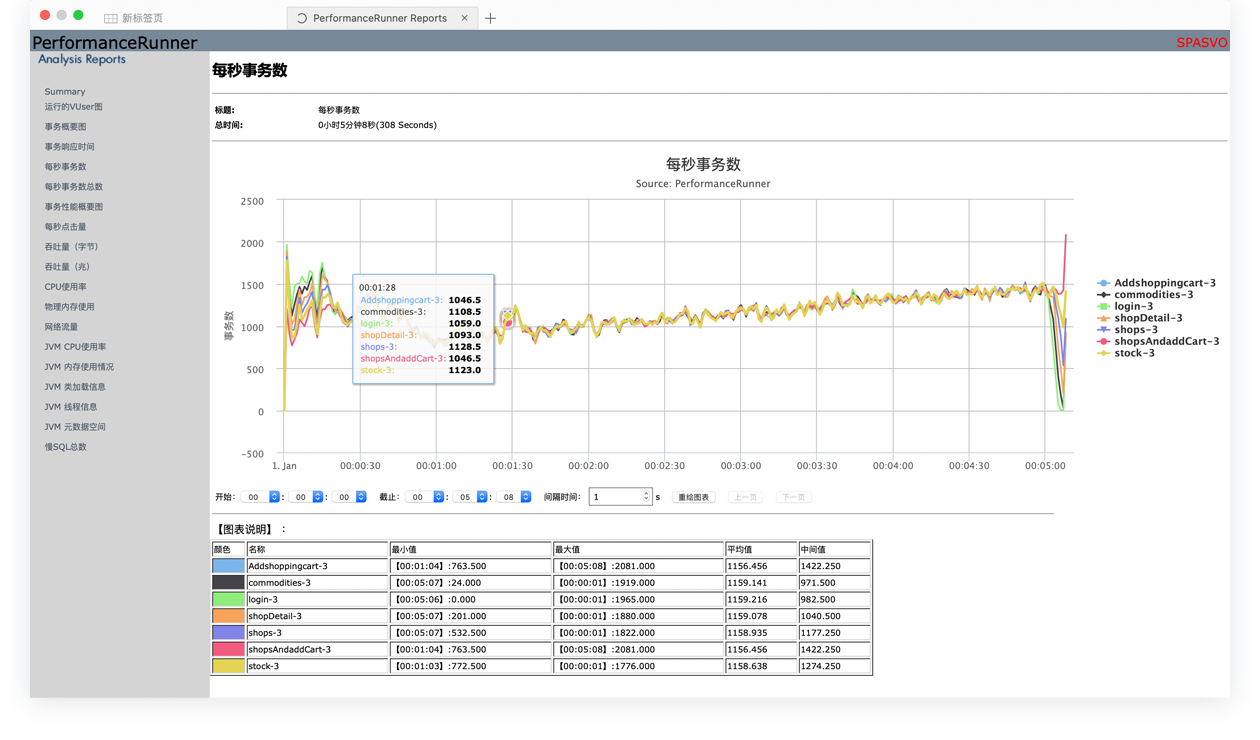
Displays key performance indicators (KPIs) under this test scenario.
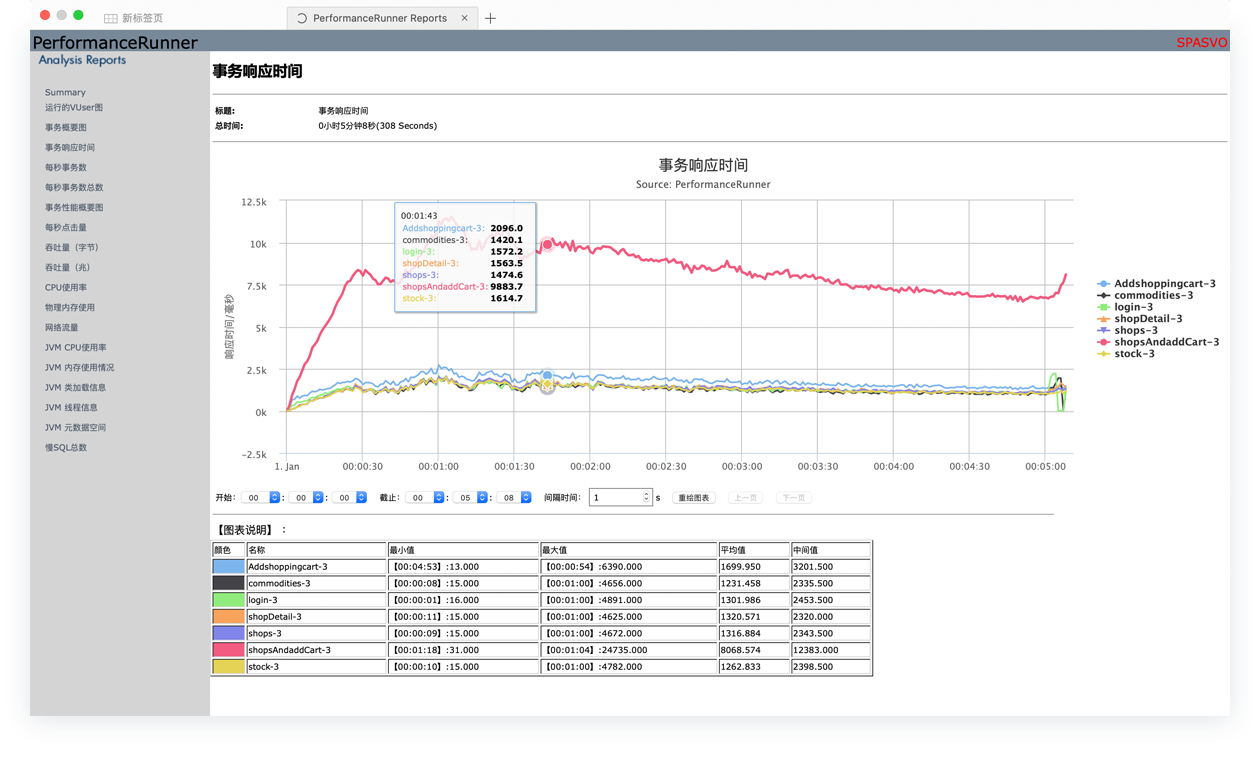
Used to analyze the speed and variability of response times for each transaction.
Used to evaluate the system’s transaction processing capacity under load.
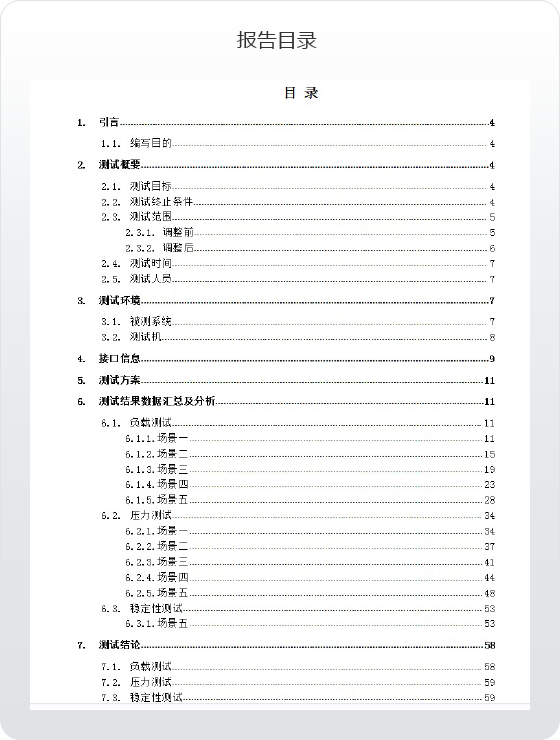
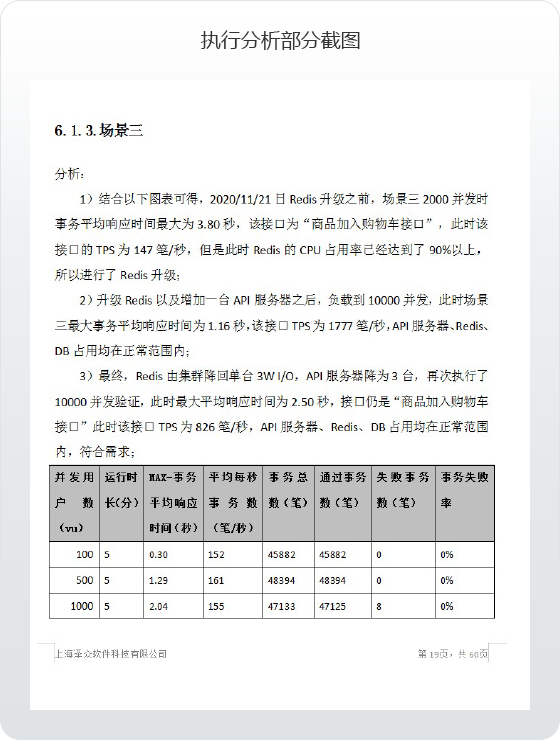
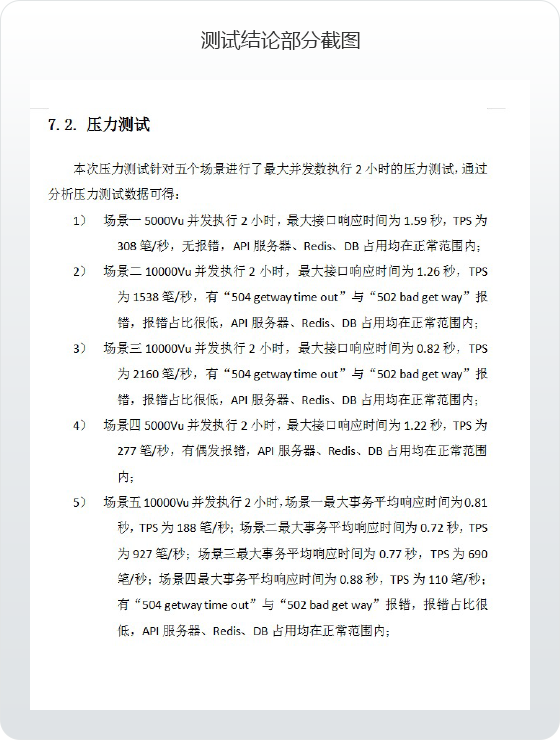
Partial preview of the test report. For full details, please contact customer support.