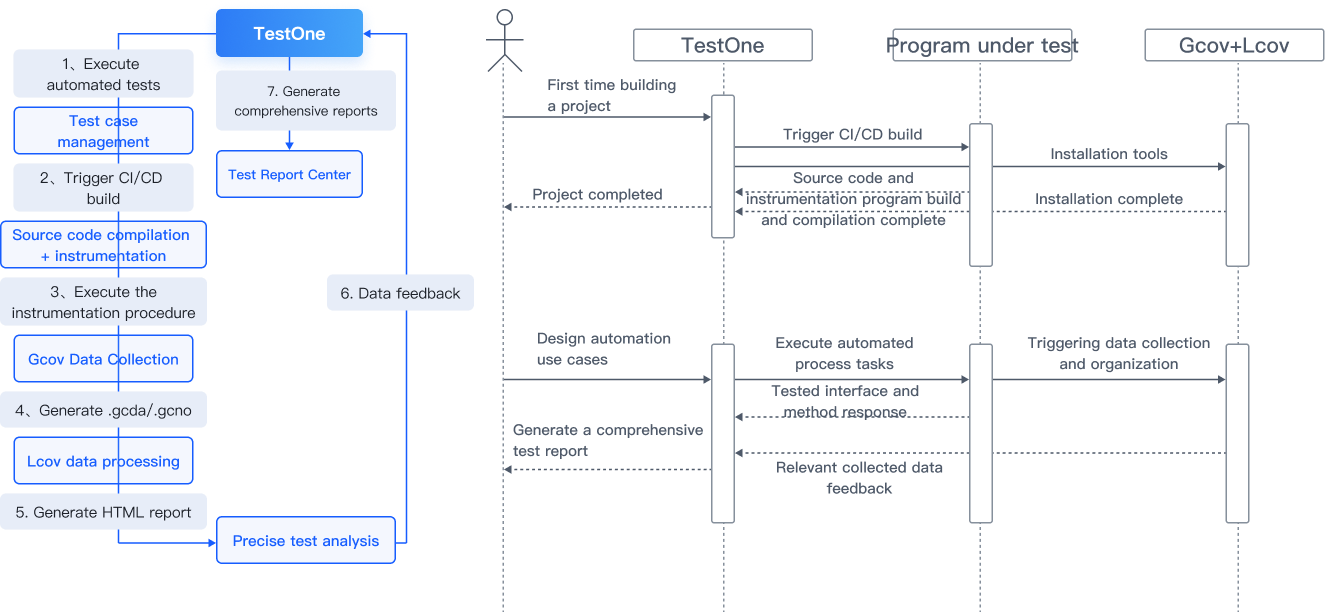
ZeZhong TestOne’s precision testing is a methodology that leverages code coverage analysis (e.g., line, branch, method coverage) and dynamic data tracing to accurately quantify the extent to which test cases exercise the source code. It identifies untested code segments or logical branches. By integrating tools such as JaCoCo and LCOV with automated strategies, it focuses on high-risk modules, optimizes test case design, ensures critical code paths are thoroughly validated, and thereby enhances testing efficiency and software quality.
Includes fundamental metrics such as line coverage, method coverage, and branch coverage.
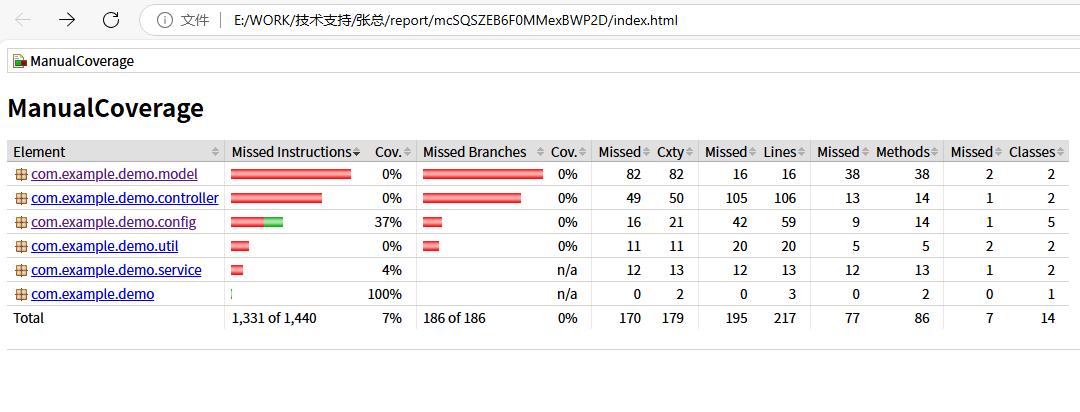
Analyze raw reports to gain initial insights into project coverage, identify low-coverage modules and code areas, and guide subsequent optimization efforts.
When a project involves multiple test cases, aggregate coverage data generated from individual tests to produce a comprehensive report reflecting overall test coverage.
Validate that the merged report accurately reflects each test case’s contribution to coverage, avoiding data conflicts or omissions to ensure reporting accuracy.
Convert aggregated coverage data into HTML-based visual reports, enabling team members to intuitively review code coverage and quickly identify uncovered code sections.
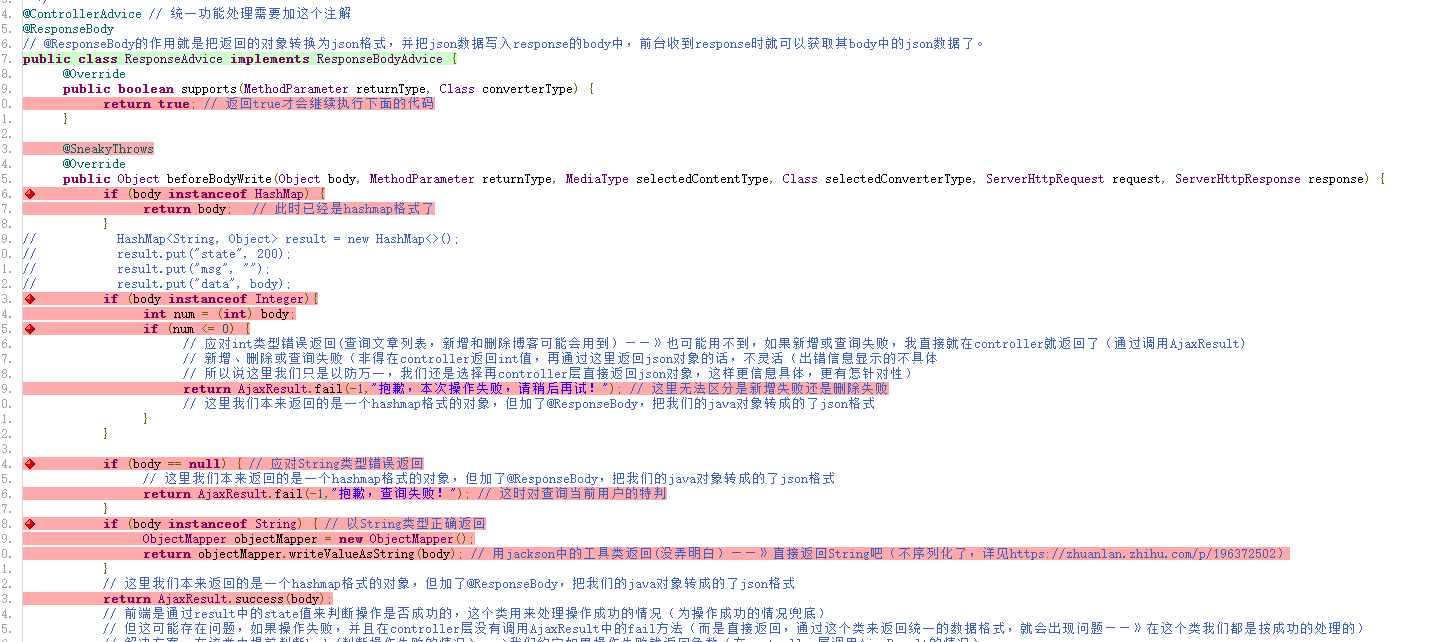
Enhance report usability by incorporating interactive features—such as clicking on a code line to view the reason for non-coverage—to support efficient code reviews and optimizations.
TestOne integrates with JaCoCo to perform precise code coverage testing on Java projects. Leveraging source code and compiled binaries alongside automated test execution, it precisely identifies how much code is exercised by test cases, helping developers detect untested code segments.
Key Features Include:
Includes statistics on instructions, lines, classes, methods, and branches
Red: Not Covered; Yellow: Partially Covered; Green: Fully Covered
A. Use output=file mode to write .exec files in real-time, minimizing reliance on memory.
B. Schedule periodic backups by invoking the jacococli.jar dump command via cron jobs or scheduled tasks.
C. Integrate into CI pipelines to automatically trigger dump operations before service shutdown.
A.Ensure the --classfiles parameter points to unobfuscated, original compiled binaries.
B. Combine with --sourcefiles to specify source code paths, improving report readability.
C. Supplement with manual validation for complex scenarios such as dynamic proxies.
A. Use the jacococli.jar merge command to combine multiple .exec files.
B. Integrate JaCoCo plugins into CI tools like Jenkins for automated merging.
C. Use append=true to append coverage data instead of overwriting existing records.
stablish realistic coverage targets based on project characteristics and quality requirements—for example, line coverage ≥80%, branch coverage ≥70%, function coverage =100%—as key indicators of software quality.
Evaluate goal feasibility to ensure they reflect true quality while remaining achievable, preventing adverse impacts on schedule and deliverables due to overly aggressive or lenient targets.
Use tools to verify whether generated reports meet established goals. If not met, analyze root causes—such as insufficient test cases or problematic code logic.
For underperforming modules, develop action plans—including adding test cases or refactoring code—to achieve target coverage and improve overall code quality.
Record coverage metrics from each test cycle and plot trend charts to monitor progress, promptly identifying declines or stagnation in coverage growth.
Analyze trends to identify influencing factors—such as new feature integration or code refactoring—and proactively optimize test coverage to sustainably improve product quality.
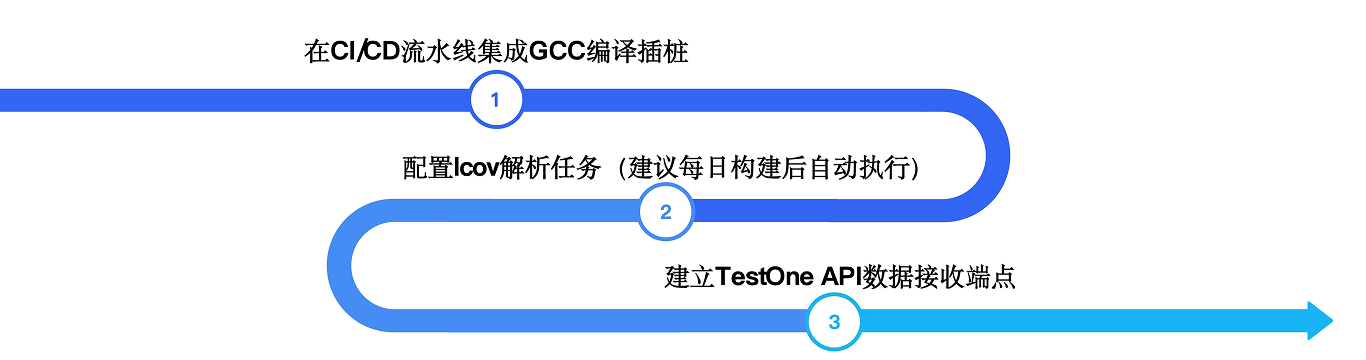
Use the command lcov --capture --directory . --output-file coverage.info to capture runtime coverage data and generate a coverage information file documenting executed code paths.
Run lcov --remove coverage.info '/usr/' '/test/*' -o filtered_coverage.info to exclude system headers and test-only code from coverage analysis, reducing noise.
Validate the integrity of filtered coverage files to prevent data loss or corruption caused by filtering, ensuring downstream reporting accuracy.
Compare file size and content before and after filtering to verify correctness and ensure the resulting data accurately represents project coverage.
Execute genhtml filtered_coverage.info --output-directory coverage_report to generate a detailed HTML-formatted coverage report.
Open the generated HTML report within the TestOne reporting interface to examine coverage levels and investigate reasons for uncovered code.
dentify modules and code regions with low coverage, and document findings for follow-up.
Add Historical Trend Comparison Views. Enable correlation analysis between coverage, defects, test cases, and requirements.
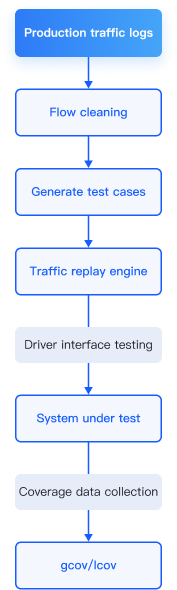
Purpose: Serve as a production-grade test data source, capturing real user API requests, response payloads, and system behavioral data. Data Masking: Sensitive fields (e.g., ID numbers, phone numbers) in raw logs are replaced with placeholders or hashed values to ensure privacy compliance. Typical Content: Includes metadata such as request headers, request bodies, response codes, latency, and call traces.
Core Objective: Transform masked logs into valid, actionable test data suitable for reuse. Key Operations: Field Restoration: Use rule engines (e.g., regex matching, DB lookups) to replace masked fields with business-logical random or synthetic values (e.g., substitute anonymized with valid simulated ID numbers). Data Filtering: Remove invalid requests (e.g., error logs, internal test traffic). Format Standardization: Convert logs into TestOne-compatible script formats, aligning with the TestOne test framework.
Automated Conversion: Classify sanitized logs by API endpoint and auto-generate executable test scripts. Test Case Enhancement: Parameterization: Dynamically substitute variables in requests (e.g., timestamps, user IDs). Assertion Rules: Extract key fields (e.g., order ID, status code) from original responses as verification checkpoints, excluding comparisons on masked fields.
Technical Implementation: Simulate user requests using the TestOne API testing framework, supporting concurrency control and timing adjustments. Core Capabilities: Request Distribution: Replay traffic to the system under test at full scale or sampled ratios. Context Management: Handle dependency chains (e.g., automatic retrieval of login session tokens). Exception Handling: Detect timeouts, service outages, etc., and flag failed test cases accordingly.
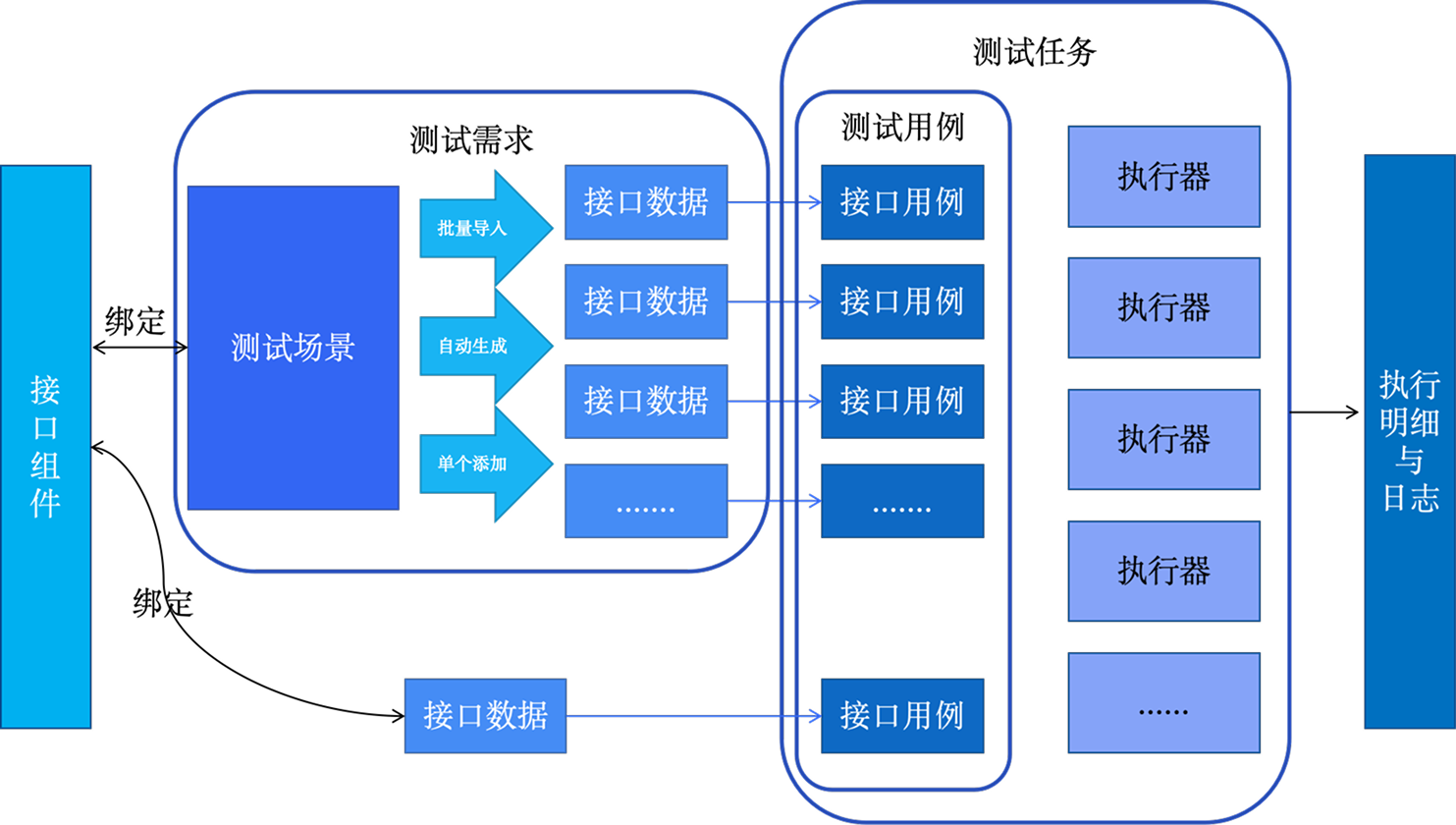
Develop TestOne API test components to automate environment cleanup, program compilation, test suite execution, coverage report generation, and compliance checks. Design script workflows and logic to enable end-to-end automation, minimizing manual intervention and improving test efficiency and accuracy.
Debug scripts, fix errors, and ensure reliable execution across environments to generate accurate coverage reports.
Optimize script performance and functionality based on usage feedback—e.g., add robust exception handling, refine logging—to enhance stability and practicality. Conduct regular reviews of script performance and iteratively improve them based on project needs and team feedback to elevate the quality and efficiency of automated testing.
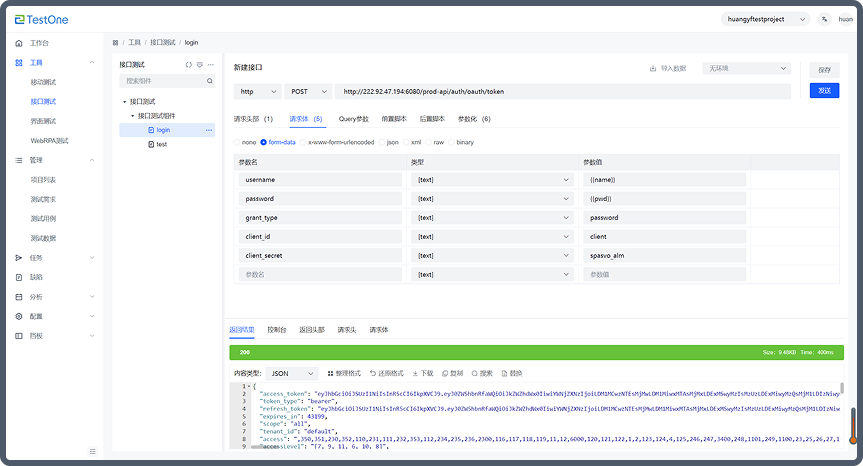
View the actual response messages returned by the API during script debugging.
Reflects the proportion of executed code lines, indicating test coverage depth and helping teams identify untested code. Compliance Requirement: Line coverage ≥80%. Falling below this threshold may indicate significant untested code and potential quality risks.
Indicates the percentage of conditional branches covered. This metric helps teams identify uncovered branch paths, refine test cases, and reduce code risk.
Compliance Requirement: Branch coverage ≥70%. Failure to meet this may suggest missing branch logic, requiring additional test cases to improve coverage.
Reflects whether all functions have been called at least once, ensuring no function remains untested and enhancing code quality.
Compliance Requirement: Function coverage =100%. Any shortfall indicates uncalled functions requiring code logic review and test coverage remediation.
Measures the coverage of individual sub-expressions within a Boolean condition. Helps identify uncovered condition combinations and mitigate risks from overlooked logic paths.
Compliance Requirement: Condition coverage ≥70%. Below-target results imply gaps in condition logic testing; additional test cases should be added to ensure completeness and reliability.
The ratio of test cases to lines of code, used to measure test coverage density.
Reflects the adequacy of test case design.
A higher ratio typically indicates broader coverage of code logic and improved defect detection capability.
Target: Generally recommend 1–2 test cases per 100 lines of code, though exact thresholds should be adjusted based on project complexity and testing strategy.
The ratio of defects identified during testing to the total number of defects (including those found post-release).
Assesses the effectiveness of testing activities and the team’s ability to uncover defects prior to release.
Target: Typically ≥90%, meaning the majority of defects should be caught during testing to minimize post-release issues.
The percentage of defects introduced by code changes that were not detected during regression testing but surfaced later in testing or production.
Evaluates the effectiveness of regression testing and the degree to which test cases cover code modifications.
Target: Typically ≤5%, indicating that regression testing should catch nearly all change-induced defects.
Typically measured using Cyclomatic Complexity, representing the number of independent paths in the code. Combined with coverage analysis, it helps assess test adequacy for complex code segments.
Refers to code modules with significant impact on system stability or functionality that remain untested. This metric identifies high-risk areas, enabling teams to prioritize test case development and reduce production failure risks.
Dead code refers to code that will never be executed or invoked. The dead code detection ratio measures the proportion of such code relative to total codebase size.
Significance: Dead code increases maintenance overhead and may harbor hidden vulnerabilities. Detecting and removing it improves maintainability, readability, and reduces technical debt.
The automation testing platform supports both B/S and C/S architectures, enabling automated testing across multiple browsers (Chrome, Firefox, Edge, IE) and desktop applications (.NET, Visual C++, Java, etc.).
Supports multiple protocols including HTTP/HTTPS, TCP/IP, WebService, WebSocket, and UDP, delivering fully configurable and extensible API testing solutions for efficient backend service validation.
The automation testing platform supports B/S and C/S architectures, enabling automated testing on various mobile browsers (Chrome, Firefox, etc.) and native apps. (Note: Original text appears duplicated; corrected contextually)
End-to-End Automated Testing Platform
Teams: sales@spasvo.com
Public Security Registration: 31010702003220
© 2015–2025 Shanghai ZeZhong Software Co., Ltd. All Rights Reserved.Teams:
ICP License: Hu ICP Bei 07036474-4
Public Security Registration: 31010702003220
© 2015–2025 Shanghai ZeZhong Software Co., Ltd. All Rights Reserved.